What is Blazeit?
Blazeit is a saturation clipper and transient shaper for Mac and Windows. It clips the peaks of your drums and bass to make them louder, then puts back the attack that clipping usually takes away, so kicks and snares stay punchy instead of dull.
Your sound can be warmed by Tape, Tube or Grit saturation before it reaches the clipper. The clipper shapes the peaks with one of four curves, and the transient shaper re-injects the lost snap after the clip stage. Auto-gain keeps the level matched, so you compare by ear, not by volume.
How does saturation and clipping work?
Saturation adds harmonics to a sound by gently bending the waveform, the way analog tape or tubes color audio when driven hard. Clipping is the harder version: it chops the peaks flat, making the signal louder and denser. Both reduce the dynamic range, so quiet parts stay while loud peaks are shaved down. The character depends on the curve shape, and different shapes sound warmer, brighter or more aggressive.
Quick start
Get a result with Blazeit in under a minute.
- Insert it. Put Blazeit on the track or bus you want to process.
- Pick a preset. Open the Presets menu and choose one close to what you want.
- Shape it. Work through the numbered controls below until it sounds right to your ear.
- Use Auto-Gain. Switch on AG so the level stays matched, and judge the sound, not the volume.
- Blend to taste. Pull Mix back from 100% if you want a subtler result.
- Compare. Bypass the plugin in your DAW to hear before and after.
The interface
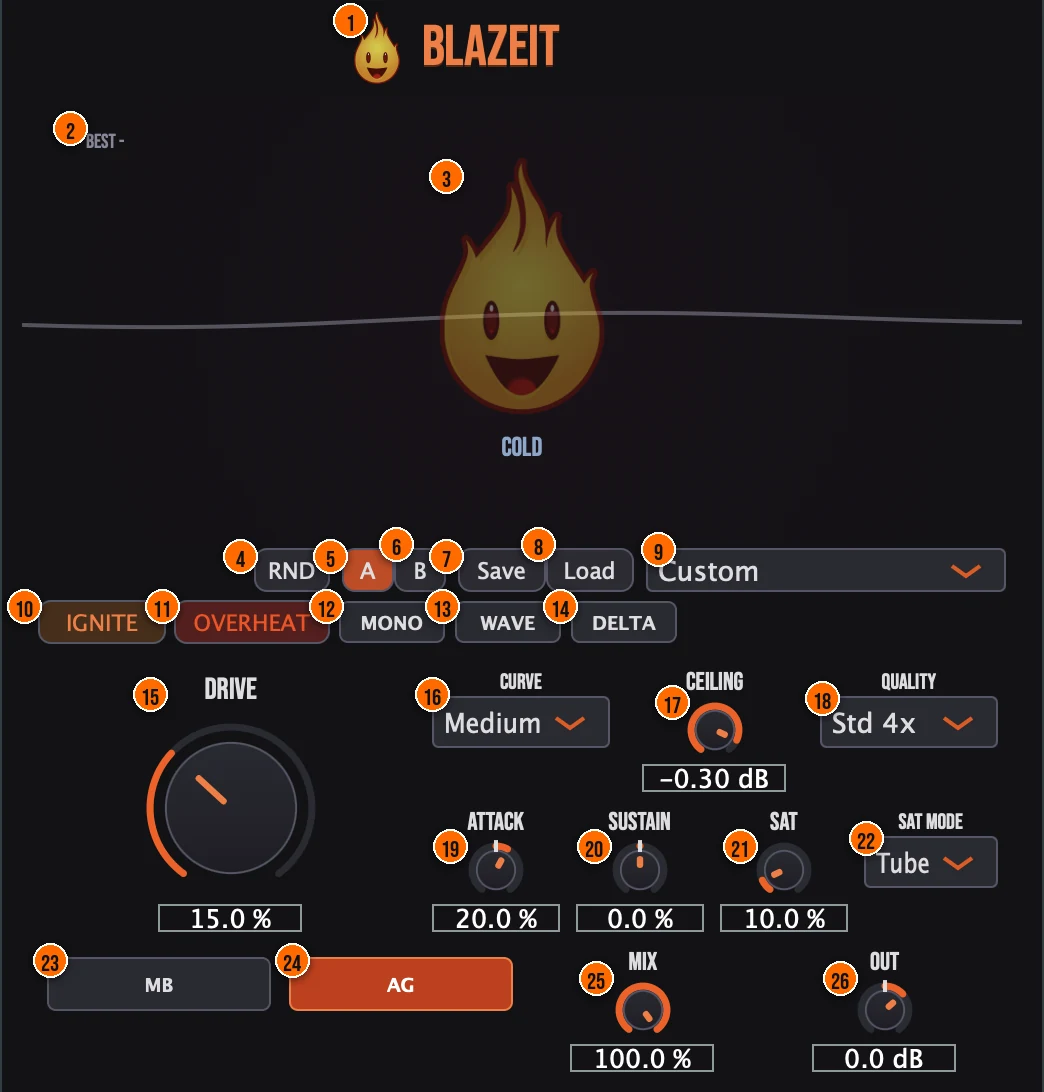
Controls
Top bar
- 1Fire Head: click the flame logo to open the About panel: what the plugin is, who made it, its version and the trademark notices. Click anywhere in the panel to close it.
Presets and compare
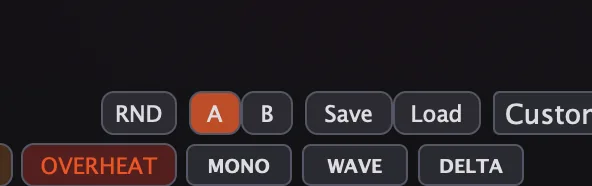
- 4RND (Randomize): randomizes Drive, Curve, Attack, Sat and Sat Mode.
- 5A: the first of two compare slots. A and B store and recall two complete sets of settings, for instant comparison.
- 6B: the second compare slot.
- 7Save: saves your settings as a .preset file you can share.
- 8Load: loads a .preset file.
- 9Presets: 16 factory presets, from Subtle Knock and Kick Punch to Mix Bus Loud, Sub-Safe Smasher and Club-Proof Master.
Performance and monitoring
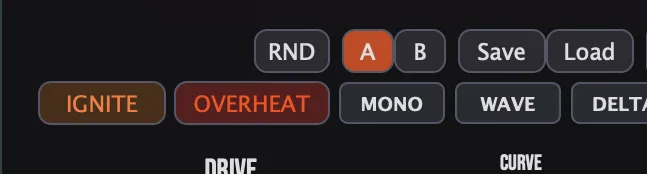
- 10IGNITE: sweeps Drive from 0 up to your current setting over 500 ms, for a build into a drop.
- 11OVERHEAT: while you hold it, Drive goes to 100%, the curve switches to Hard and oversampling goes to 8x. Let go and your settings come back.
- 12MONO (Mono Check): folds the output to mono, to check how it translates to mono speakers. With MB on as well, only the low band folds to mono.
- 13WAVE: shows scrolling before and after waveforms in the display.
- 14DELTA: Delta mode: hear only what the clipping and saturation are adding.Tip Use DELTA to hear only what the processing adds, then switch it off to judge the full sound.
Clipper
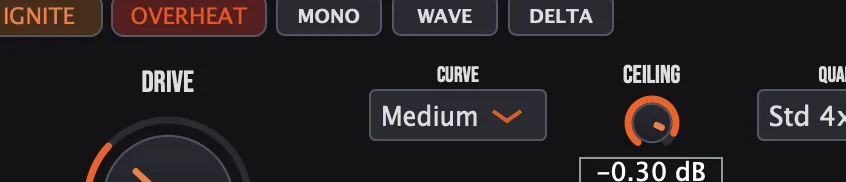
- 15Drive: how hard the signal hits the clipper. The scaling is logarithmic, for fine control in the sweet spot.0 to 100%Tip Start around 30% for subtle warmth on a mix bus, or push past 60% for aggressive clipping on drums.
- 16Curve: the clip curve: Soft (polynomial), Medium (tanh), Hard (brick-wall) or Cubic (smooth S-curve), from gentle rounding to a flat ceiling.Soft, Medium, Hard, CubicTip Soft and Medium are forgiving on full mixes. Hard and Cubic are more aggressive, better for individual drums or bass.
- 17Ceiling: the highest level the clipper lets through.−3.0 to 0.0 dB, default −0.30 dBTip Set Ceiling to -0.3 dB for streaming-safe masters, or lower it to -1 dB for more headroom on a bus.
- 18Quality: the oversampling. Blazeit always reports the HQ latency to your DAW, so switching quality never causes a gap.Draft 2x, Standard 4x, HQ 8x
Transient shaper
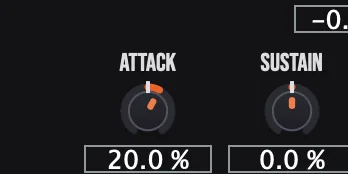
- 19Attack: re-injects the transient click that clipping removes. Raise it until the snap comes back.−100% to +100%Tip After clipping a kick, raise Attack until the beater snap comes back. Stop before it sounds harsh.
- 20Sustain: independent control of the sustained part of the sound.−100% to +100%Tip Negative Sustain values tighten the tail, useful for making room after the transient.
Saturation
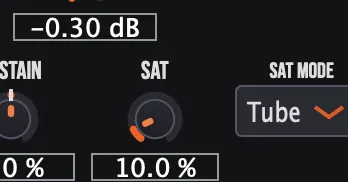
- 21Sat: the pre-clip saturation stage, which colors the sound before the clipper.Tip A touch of Tape before the clipper warms up digital sources. Grit adds a rough, folded edge.
- 22Sat Mode: Tape (warm, asymmetric), Tube (even harmonics) or Grit (wavefolding, odd and even harmonics).Tape, Tube, Grit
Multiband and level
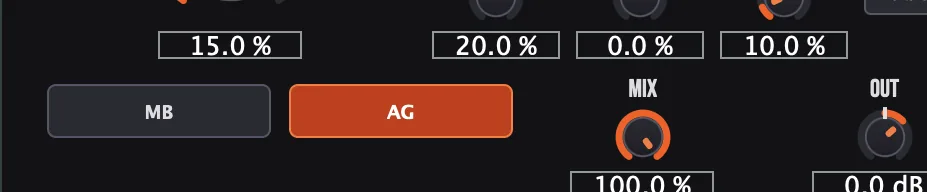
- 23MB (Multiband): splits off the low band with a Linkwitz-Riley crossover, so a separate Bass Clip amount drives the lows independently from the mids and highs.Crossover 60 to 500 Hz, 24 dB/octaveTip Switch on MB to clip the mids and highs harder while keeping the sub round.
- 24AG (Auto-Gain): K-weighted loudness matching, so louder never fools your ears. It is smoothed over 1.5 seconds to avoid pumping.
- 25Mix: blends the processed signal with the dry signal, for parallel processing.0 to 100%, default 100%Tip Pull Mix back to 50-70% for parallel clipping: louder and thicker without losing the dry signal.
- 26Out (Output): the final level trim.−12 to +6 dB, default 0 dB
Meters and displays
- 2BEST (Best Streak): your longest Heat Streak so far, kept across sessions. It shows a dash until you have one.
- 3Fire Head heat display: the character shows how hard you are driving, from the crest factor of your signal, in four heat states: Cold, Warming, Sweet Spot and Burnout. The current state is written under it. It bobs in time with your DAW's tempo.
- Heat Streak: counts the seconds you stay in the Sweet Spot in a row, with milestones at 10, 30, 60, 120 and 300 seconds.
Key specs*
| Clip curves | Soft, Medium, Hard, Cubic |
|---|---|
| Drive | 0 to 100%, logarithmic |
| Ceiling | −3.0 to 0.0 dB, default −0.30 dB |
| Oversampling | Draft 2x, Standard 4x, HQ 8x |
| Latency | Static: always reports the HQ latency to your DAW |
| Attack and Sustain | −100% to +100% |
| Saturation modes | Tape, Tube, Grit, before the clipper |
| Multiband | Linkwitz-Riley, 24 dB/octave, 60 to 500 Hz |
| Auto-gain | K-weighted (ITU-R BS.1770), 1.5 s smoothing |
| Parameters | 20 ms smoothing |
| Factory presets | 16 |
* Key specs from the plugin page. Some specs may not be listed.
How does the sound flow through Blazeit?
A simplified view of the main path.
In multiband mode the low band gets its own Bass Clip amount.
What does Grit do as Sat rises?
Grit soft-clips the wave, then bends it through a sine-shaped fold. Sat sets how hard the wave is pushed into both. Below, the same sine goes through Grit at three Sat settings.
Drawn from Blazeit’s Grit curve, before the clipper. Grit squashes the top of the wave harder than the bottom, so the wave leans to one side. As Sat rises the higher harmonics grow, and at full Sat the lowest part of the wave just begins to fold back on itself. The 3rd harmonic stays the strongest. Bar 1 is the original note.
Two-band split
With MB on, Blazeit splits the signal at XOVER and clips each band on its own. BASS sets the clip amount for the low band, and Drive sets it for the mids and highs. A bass note's fundamental sits in the low band, while its harmonics stack up in the high band.
An A1 bass note (55 Hz) with XOVER at 100 Hz. BASS clips the fundamental (blue), and Drive clips the harmonics from 110 Hz up (orange). Set BASS lower than Drive and the sub stays round while the harmonics carry the bite.
How do I clip a kick bus without losing the punch?
- Load it. Put Blazeit on your kick bus, or on a parallel clip chain.
- Set the clipper. Choose the Hard or Cubic curve, set Ceiling to −0.3 dB, and pick Tape in Sat Mode.
- Drive it. Bring Drive to 40 to 60%. The kick gets louder, and its first click starts to soften.
- Bring back the snap. Raise Attack from about +20% until the kick's snap comes back. Stop before it sounds harsh.
- Check what it adds. Switch on DELTA to hear only what the clipping and saturation are adding, then switch it off.
- Compare fairly. Switch on AG so the level stays matched, and judge the punch by ear.
How do I warm up a flat mix bus with Blazeit?
- Insert it. Put Blazeit on your stereo mix bus.
- Choose Tape. Set Sat Mode to Tape for warm, asymmetric saturation before the clipper.
- Keep Drive low. Set Drive between 10 and 25%. You want color, not clipping.
- Pick a gentle curve. Choose the Soft or Medium curve so the peaks round off instead of chopping flat.
- Match the level. Switch on AG to compare by ear, not by volume.
What about Blazeit Raw?
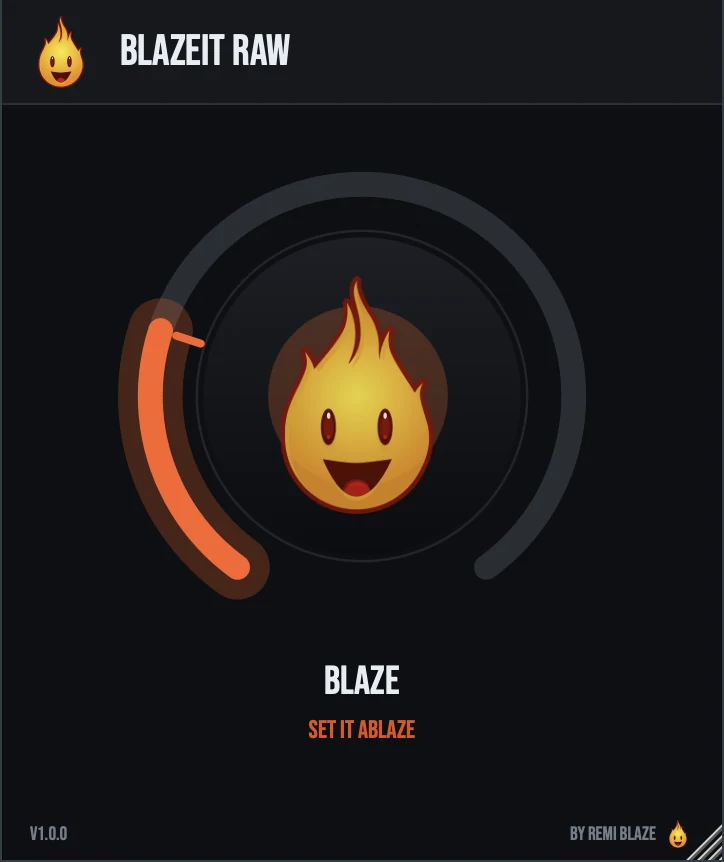
Blazeit Raw is the free one-knob version. Its BLAZE knob adds saturation and clip heat together, from gentle warmth at low settings to louder and hotter further up. Auto-gain is always on, so every position stays level-matched. It runs in an 8x oversampler and reports a fixed latency. Its own manual: Blazeit Raw manual.
Blazeit vs. Blazeit Raw
A side-by-side look at what each version includes.
| Feature | Blazeit | Blazeit Raw |
|---|---|---|
| Presets | Included | Not included |
| A/B compare | Included | Not included |
| Randomize | Included | Not included |
| Oversampling control | Included | Not included |
| Mix (dry/wet) | Included | Not included |
| Output level | Included | Not included |
| Multiband | Included | Not included |
| Auto-gain | Included | Included |
| Delta / listen mode | Included | Not included |
| Mono check | Included | Not included |
| Waveform display | Included | Not included |
Keyboard and mouse shortcuts
These work in every Blazeit format (AU, VST3, CLAP, AAX, Standalone).
| Reset a control to its default | Double-click the knob or slider |
|---|---|
| Scroll to change a value | Hover over a knob and scroll the mouse wheel |
| Type an exact value | Click the value below a knob and type a number |
Frequently Asked Questions
What do IGNITE and OVERHEAT do?
IGNITE sweeps Drive from 0 to your setting over 500 ms, for a build. OVERHEAT holds Drive at 100% with the Hard curve and 8x oversampling while you press it, then returns to your settings.
Why doesn't the latency change when I switch Quality?
Blazeit always reports the HQ latency to your DAW, so you can switch between Draft, Standard and HQ without a gap.
What do Cold, Warming, Sweet Spot and Burnout mean?
They are the Fire Head's heat states, read from the crest factor of your signal. Cold is light clipping, Sweet Spot is the target range, and Burnout means you are driving it too hard.
How do I keep the sub round on a full mix?
Switch on MB. The low band is split off with its own Bass Clip amount, so you can drive the mids and highs harder and clip the lows more gently.
Where can I find more about Blazeit?
On the Blazeit page: its features, system requirements and how to get it.
How do I buy and install Blazeit?
- Buy it. Blazeit is a one-time purchase. Buy it from the Blazeit page, and the store emails you the download link.
- Run the installer. On macOS, double-click the .pkg file and choose AU, VST3, CLAP, AAX or Standalone. On Windows, run the .exe installer and choose VST3, CLAP or Standalone.
- Open your DAW. Restart your DAW and rescan plugins if needed, then find Blazeit under Remi Blaze in your plugin list.
More about Blazeit, including its features and system requirements, is on the Blazeit page.
Where are the plugin files?
If you need to find Blazeit on disk, for example to troubleshoot or to uninstall it manually, these are the standard locations.
| macOS AU | ~/Library/Audio/Plug-Ins/Components/ |
|---|---|
| macOS VST3 | ~/Library/Audio/Plug-Ins/VST3/ |
| macOS CLAP | ~/Library/Audio/Plug-Ins/CLAP/ |
| macOS AAX | /Library/Application Support/Avid/Audio/Plug-Ins/ |
| Windows VST3 | C:\Program Files\Common Files\VST3\ |
| Windows CLAP | C:\Program Files\Common Files\CLAP\ |
To uninstall, quit your DAW and delete the Blazeit file from the relevant folder. Your DAW will stop listing it on its next rescan.
Need help with Blazeit?
If something isn't covered here, or Blazeit doesn't behave as described, contact support or email support@remiblaze.com. To get an answer faster, include:
- your operating system and version (for example macOS 15.6 or Windows 11)
- your DAW and its version
- the format you're using (AU, VST3, CLAP, AAX or Standalone)
- the Blazeit version, shown in the About panel (click the Fire Head)
- what you did, what you expected, and what happened instead
This manual is for Blazeit 1.1.0. Controls and settings can change between versions, so if something here doesn't match what you see, check which version you have: click the Fire Head to open Blazeit's About panel. Spotted a mistake or have a question? Let us know.